Sharpening the Mind: The Cognitive Power of Martial Arts
In the world of neurodiversity coaching, we often talk about "top-down" strategies—using our thoughts to manage our behaviors. However, martial arts like Karate offer a powerful "bottom-up" approach. By engaging the body in highly structured, complex movement, we can directly influence the brain's executive functions.
Beyond Neuroplasticity
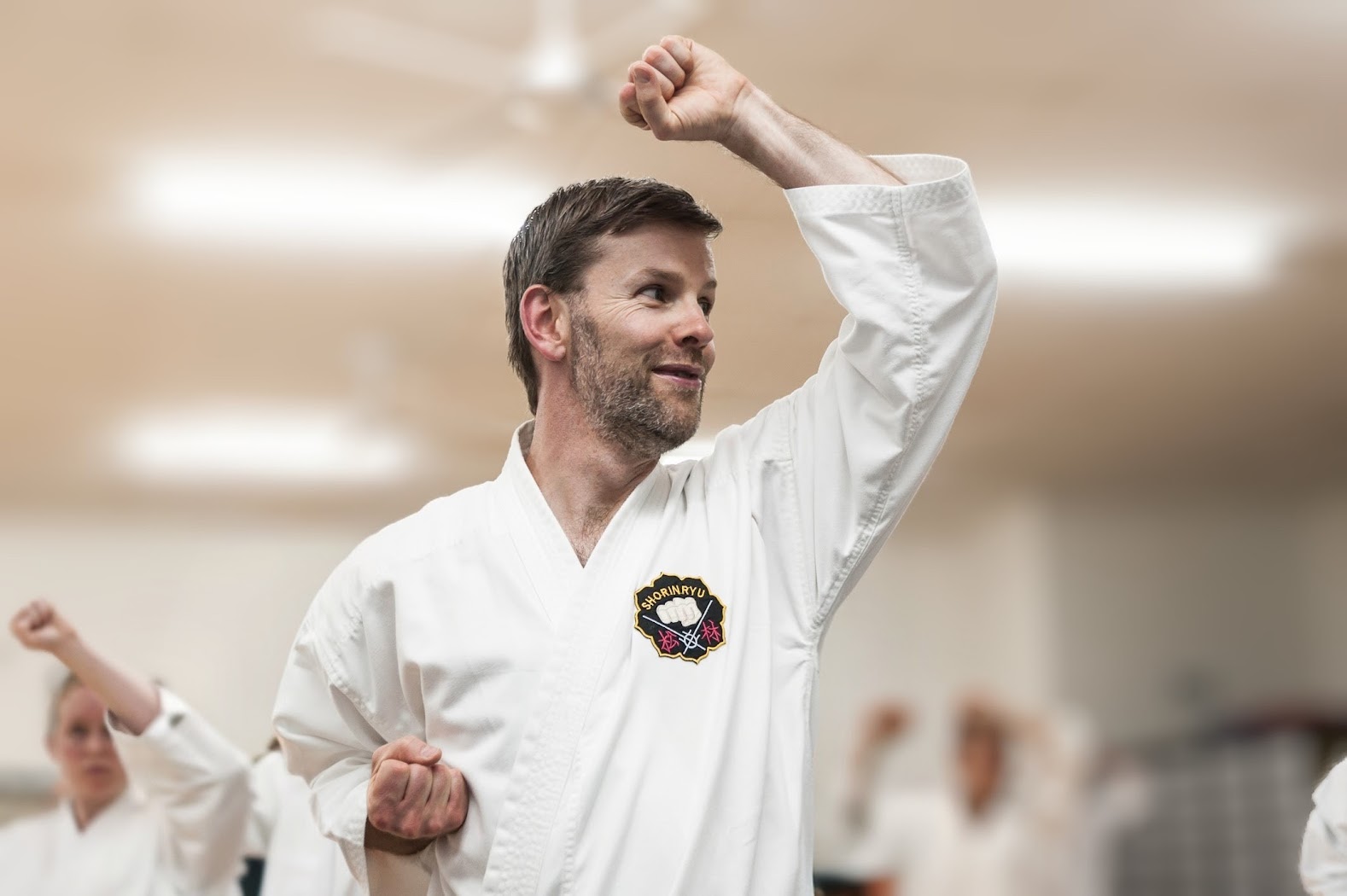
When I first started Karate, my primary motivation was neuroplasticity. I wanted to see if the combination of memory and physical movement could "wire" my brain differently. While that remains important, I've come to realize that my lifelong struggle with memory wasn't necessarily a lack of capacity, but rather a result of executive functioning deficiencies caused by my ADHD.
This is where the structure of Karate becomes a tool for regulation. Almost every lesson involves drills for basic moves that are counted out. To show respect, you should wait until the instructor says the next count before doing the next move. This forces me to focus and concentrate on the instructor, and not jump the gun and do the move based on the timing of the previous moves. After five years of practice, I rarely move before the count is given. I can't say definitely if this has an impact in every day life, but I think it does.
I appreciate how it eases you in. The basics are very basic, but I still found them challenging. The gradual learning, combining the body and mind, has been excellent. In addition to this, the focus on basics and techniques is useful for practicing on focusing on the details—something that ADHD minds often struggle with.
The Neurodivergent Friction
Of course, the experience isn't without its challenges. My neurodiversity creates specific frictions in the dojo that I have to navigate:
- Sensory Overload: All sound comes in at once for me, and I have a lot of trouble picking out commands and counts when it is noisy. There isn't much I can do about this, apart from focus more intently.
- The Memory Gap: I still have a lot of trouble remembering everything that is required. As I've noted in my memory article, I've found repetition, particularly spaced repetition, is incredibly helpful. Karate provides this perfectly; concepts based on your grade are repeated repeatedly.
- The Perfection Trap: The seemingly requirement of perfection can be challenging. For kata, there can be 30-40 moves for each one. Each move can have a specific stance, block or thrust, not to mention the kiai's or focused shouts. It is a lot to remember, and I often feel I'll never be able to remember everything perfectly.
Navigating RSD in the Dojo
One of the biggest benefits of karate is the motivation to improve and learn to earn the next grade or belt. The flip side of this is bad Rejection Sensitive Dysphoria (RSD).
When I feel that I'll never be "perfect" at a kata, I tell myself that I have remembered the basic moves, which I struggled with initially. Based on that, I know that with enough practice, I'll be able to learn and perform the katas. This is powerful. While I don't feel perfection is achievable, not doing activities because I don't think I'll be 'good enough' isn't going to help me grow and improve.
It also allows me to put things like RSD into context. Just like with work and life in general, I have to perform well enough to manage life and not get fired. I can't make constant mistakes, and karate is just the same. When I think about it this way, it makes me motivated to power through the RSD and keep on practicing.
← Back to Articles